

 Photography: John Paul Urizar. Styling: Michele Cranston. Recipe: Fran Abdallaoui.

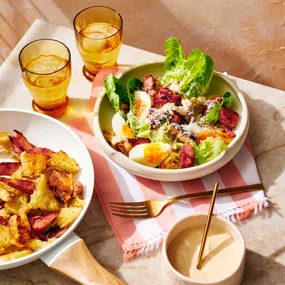
This filling protein bowl uses quinoa tabbouleh as a base. Choose lamb back strap, salmon or lentils as your protein for a complete meal and have it on the table in just 30 minutes.
Ingredients
Method
Place bone broth and quinoa in a large saucepan; bring to the boil. Reduce heat to low-medium; simmer gently for 15 minutes or until most of the stock is absorbed. Remove from heat. Cover; stand for 5 minutes.
Meanwhile, cook eggs in a small saucepan of boiling water for 5 minutes. Remove immediately and cool under cold running water for 30 seconds.
Heat half the oil in a medium saucepan over medium heat. Add garlic; cook, stirring, for 1 minute or until fragrant. Next, add chard; stir until wilted. Add cooked quinoa and lemon juice; season quinoa tabbouleh to taste.
Combine parsley, both sesame seeds and salt in a small bowl. Peel eggs and roll in parsley mixture.
If your choice of protein is either lamb or salmon, season with salt and pepper. Heat the remaining oil in a heavy-based non-stick frying pan over high heat; cook for 3 minutes on each side or until cooked to your liking. Thinly slice lamb or flake salmon.
Top quinoa tabbouleh with halved eggs and chosen protein.
Key ingredients in this protein bowl recipe
Alongside Food Director Fran Abdallaoui at The Australian Women’s Weekly Health Summit events, our Health Editor Ashleigh Austen reveals why she loves these nutritious ingredients.
Quinoa: Pronounced keen-wa, the star of this tabbouleh has a slightly nutty taste and chewy texture. “Quinoa is a complete protein, meaning it contains all nine essential amino acids – rare for a plant food!” says Ashleigh. “It’s also high in fibre to support digestion and help you feel fuller for longer. Naturally gluten-free and easy on the gut.”
Eggs: “Eggs are packed with protein, rolling them in parsley and sesame seeds gives an extra dose of antioxidants and healthy fats,” says Ashleigh.
Lamb backstrap: This tender cut is best cooked rapidly in a frying pan or on the barbecue. “It’s a lean source of iron and zinc,” says Ashleigh of this protein pick.
Salmon: “Leaving the skin on salmon helps it stay moist while cooking and contains extra omega-3s and collagen, but if you’re not a fan of eating the skin, that’s totally fine, you’ll still get all the key nutrients from the flesh,” explains Ashleigh.
Lentils: “High in plant protein, fibre and folate, lentils are great for gut health and stable energy,” adds Ashleigh.